When Riverlife invited artist Fran Flaherty to design a shade canopy for Shore Thing, she didn’t just create a structure: she created a story.
Crafted from over 20,000 Capiz shells, The Pittsburgh Chandelier honors traditions of labor, memory, and shared experience. Below, Fran shares her inspiration, process, and the meaning behind this work in her own words.
From the Artist: Fran Flaherty
The Pittsburgh Chandelier is a community-wide labor project rooted in cultural memory, migration, and sustainable art practices. As an immigrant from the Philippines, I carry with me the aesthetics and practices of my homeland. Like many before me who brought pieces of their origins to this city, I find deep meaning in merging tradition with my new surroundings.
When Riverlife approached me to design a shade canopy for Shore Thing, I turned to the materials and methods of my heritage. In the Philippines, where the tropical sun is a part of daily life, shade is essential—but so is beauty. We have long practiced the art of creating protection through sustainable, elegant means. One material stands out in particular: the Capiz shell.
Capiz shells—or Lampirong—are known for their translucent, delicate beauty. But beyond aesthetics, they serve a vital function in traditional Filipino homes, often used as windows to diffuse light while shielding interiors from heat. These “windowpane oysters” represent a fusion of practicality and grace. Though now seen in upscale stores and tourist markets, they carry deep ancestral significance for me. Capiz is the name of my paternal grandparents’ home province, and I recall seeing these shells in the homes of my childhood. My mother remembers the warm glow of light through Capiz windows as a child—how the day shifted with the sunlight dancing across her room.
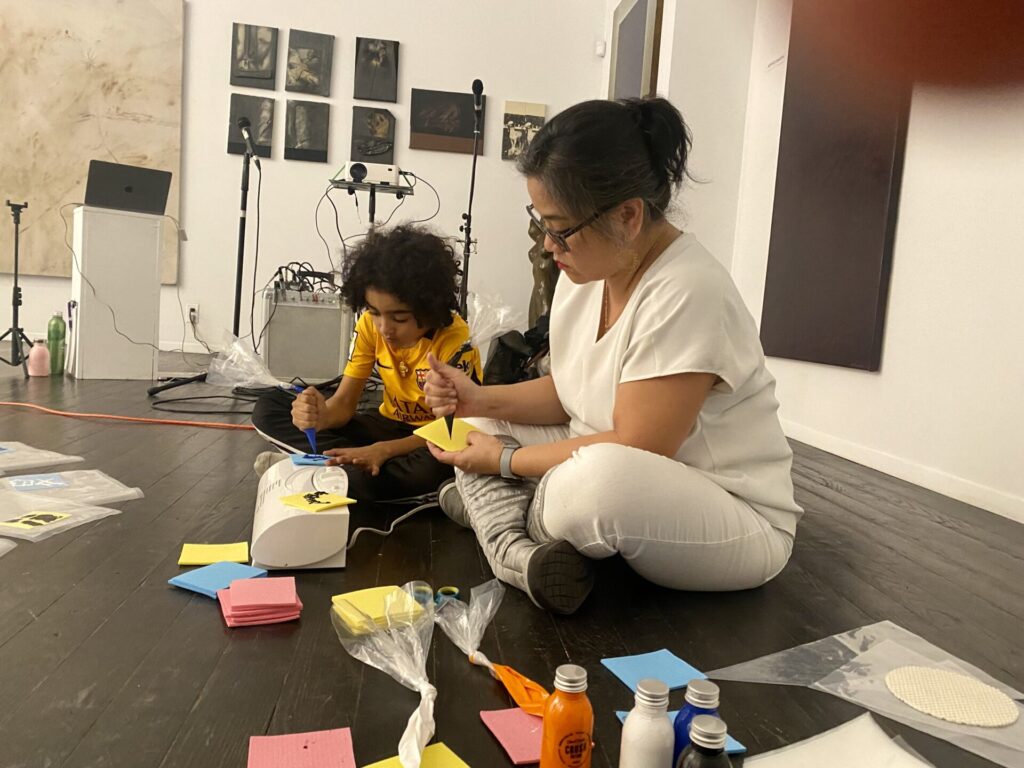
The process of harvesting and preparing Capiz shells is labor-intensive and communal, often done by families. Shells are gathered, softened, cleaned, and pressed into precise shapes through careful, collective work. This reminded me of Pittsburgh’s own working-class history, its industrial roots, and its spirit of solidarity.
As I developed the concept for The Pittsburgh Chandelier, I began to reflect on these parallels—between the traditions of my homeland and the identity of this city. Pittsburgh is a place built on labor, resilience, and the strength of community. The chandelier, composed of thousands of Capiz shells strung together, is both tribute and testament to those values.
This piece is deeply personal, but also cultural and communal. To honor this work is to acknowledge the contributions of immigrants to our region and to our country. It is also to recognize that we are all—whether by choice or by force—guests on this land. Our nation, for better or worse, was built through the gathering of peoples from all over the world.
The Pittsburgh Chandelier symbolizes our shared humanity. It reminds us that we cannot divide ourselves or compartmentalize our experiences. We are intertwined—in labor, in story, in memory. This country is not merely about land, wealth, or military power. It is about people coming together, sharing their stories, and shaping something new. This chandelier is not just a work of public art—it is an invitation. It welcomes others to participate in the act of making, to engage in care, craft, and collective memory.
As a deaf, Filipino-Chinese woman, this project also honors my own intersectional identity, and the broader richness of diasporic stories. Each Capiz shell, once a piece of someone’s labor, now becomes an emblem of our interconnectedness. As Pittsburgh’s industries transitioned—from glass in the early 1900s to steel—these glass-alternative shells stand as both homage and reminder: of labor’s dignity, cultural inheritance, and our ongoing commitment to sustainability, equity, and beauty.